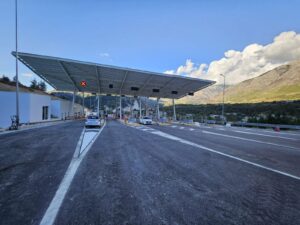
After months of dedicated work, the team at the Mihajlo Pupin Institute has completed the development and implementation of a tolling system in Albania. The project covered the full scope of activities, from initial analysis and system design to integrate with local infrastructure and on-site operator training.
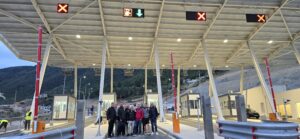
The system has been deployed in the southwest of the country, at the Logara Toll Station, Albania’s first state-owned tolling facility. The station collects tolls for the tunnel located directly behind it. It operates as an open-system tolling point, meaning that all users pay a fixed fee regardless of the distance travelled. The station consists of five toll islands and six traffic lanes, three in each direction, including two reversible lanes used to adapt to changing traffic volumes.
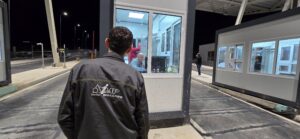
The solution operates at two levels: lane and station. At the lane level, devices interact directly with drivers and vehicles, handling vehicle detection, classification, and payment processing. Payments can currently be made in cash or by credit card, with plans to introduce free-flow electronic tolling using TAG devices. Once a transaction is completed, all data is forwarded to the station level, where a central server coordinates the operation of all lanes.
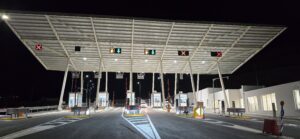
This layer consolidates data, enables real-time monitoring and control, and manages all cashiering functions. Based on the controller data, a complete event database is created for further analysis and reporting.
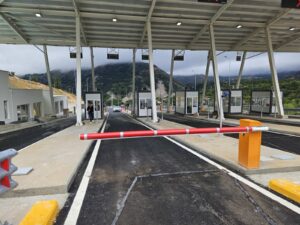
A team of twelve engineers from the Institute worked on the project using advanced data transmission technologies, centralized transaction management, and real-time system supervision. In addition to system development, our experts provided support throughout the construction phase, especially in the placement of toll booths and peripheral equipment, key factors for optimal system performance.
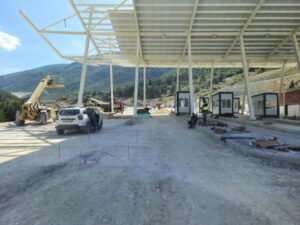
Once construction was completed, a six-member technical team from the Institute installed and connected all tolling equipment, after which engineers configured the system and performed full lane testing. This enabled the successful commissioning of Albania’s first state-owned tolling station.
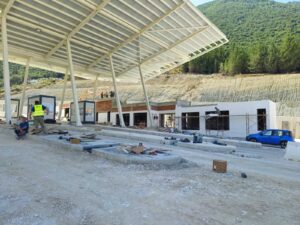
The expertise of our colleagues has resulted in a reliable and efficient tolling solution for a strategically important road corridor. The experience gained on this project serves as a valuable foundation for future international engagements in the field of intelligent transportation systems.