
Serbia is currently implementing the project “Implementation of a Network of Hydrometeorological Stations along the Danube and Sava Rivers (HMS)”, financed by the European Investment Bank. The Ministry of Construction, Transport and Infrastructure is the contracting authority, while the works are being executed by a consortium led by the Institute Mihajlo Pupin.
The Institute and its partner companies are responsible for the entire process: infrastructure design and construction, equipment installation, system integration, and ensuring reliable communications at every location.
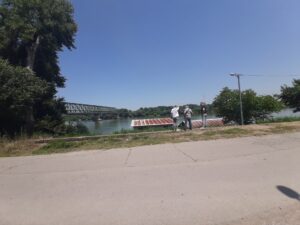
The new network will include 38 hydrometeorological stations – 28 on the Danube and 10 on the Sava. Each site will be equipped with advanced sensors for real-time hydrological and meteorological monitoring, including weather sensors (wind, temperature, humidity, pressure, precipitation), visibility sensors, underwater pressure and temperature sensors, wave-detection buoys, and robust 3G/4G and satellite communication links.
All data is collected and processed through the central controller , developed at the our Institute.
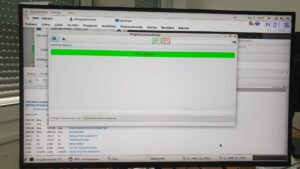
This project strengthens the modernization of Serbia’s inland waterways and enhances safety, infrastructure performance, and operational efficiency. Real-time data on water levels, waves, wind, precipitation, and visibility enable faster response during floods and storms, improve navigation planning, and reduce risks for people, infrastructure, and vessels. The system is designed as a 24/7/365 operational network with a high level of redundancy, featuring dual communication links, local data storage, two monitoring centers, secure VPN, and API integrations (SOAP/REST).
Given the remoteness of many locations, dedicated off-grid solar supply systems were engineered, featuring solar panels, AGM gel batteries, MPPT controllers, and hybrid power options (grid + solar).

The implementation of the HMS network represents a key step in the modernization of Serbia’s navigable waterways and their alignment with the standards of the Danube Commission and European transport strategies. It enables more accurate river condition information, faster response during floods and severe weather events, more efficient transport planning, and reduced risks to people, vessels, and infrastructure.
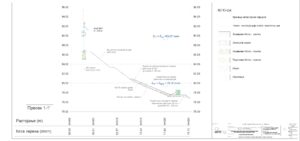
This project elevates Serbia’s inland waterway traffic management to a European level, delivering tangible benefits to public institutions, the economy and logistics sector, local communities, and all stakeholders in inland navigation. The data will be available to operators, the public, and external systems, creating opportunities for new digital services, advanced analytics, and data-driven solutions.
The planned project completion date is September next year.