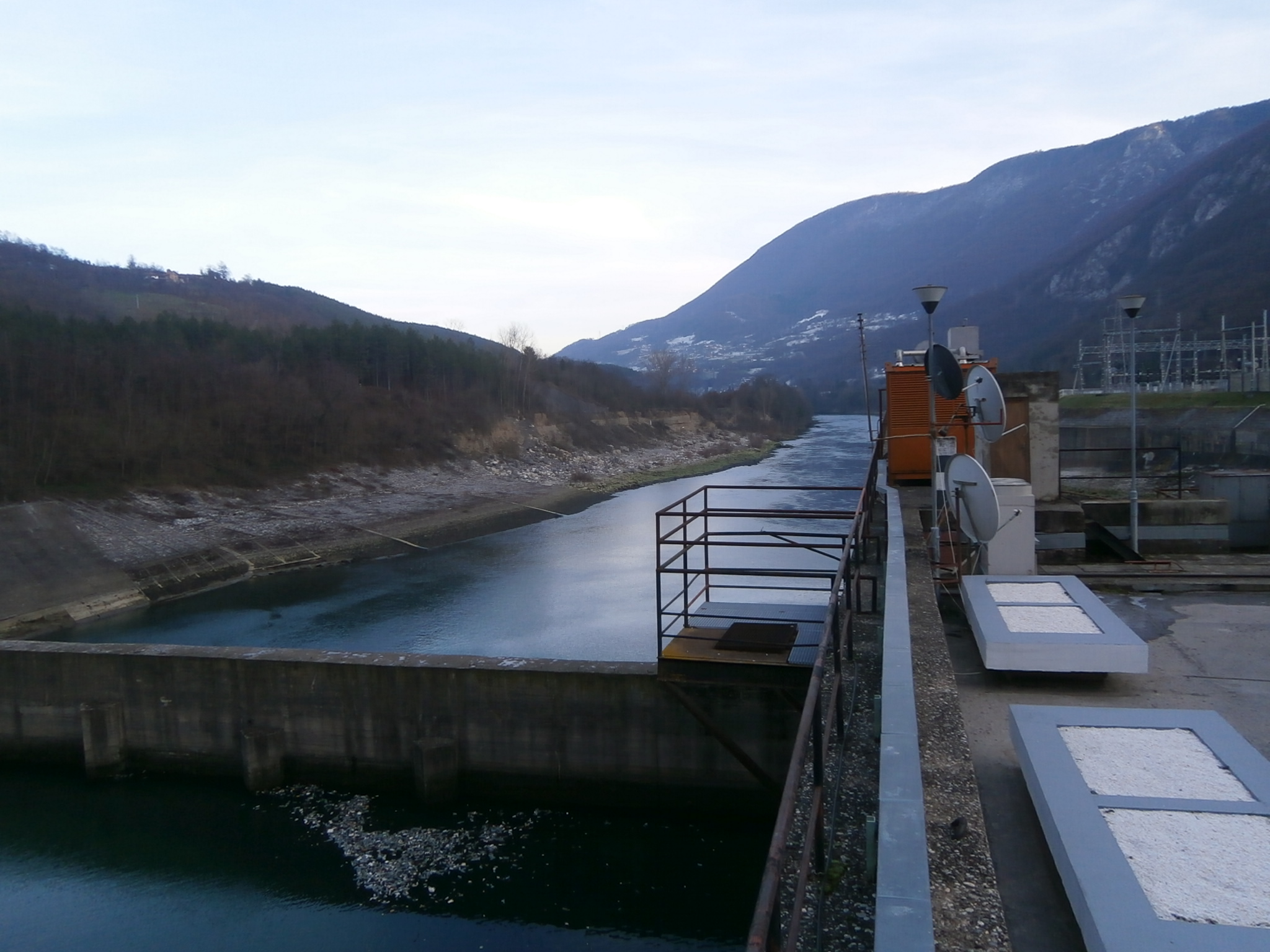
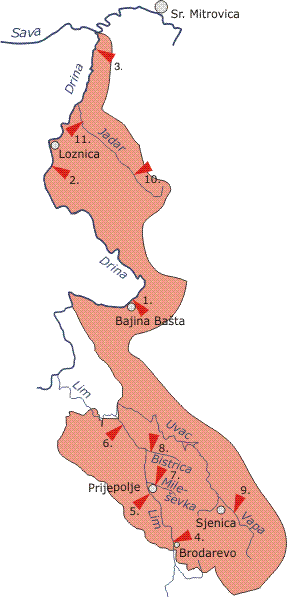
A system for predicting water inflow in the Drina–Lim river basin was developed and put into operation in March this year. Using machine learning, the system enables multi-day inflow forecasts for predefined locations based on current and historical hydrological and meteorological data.
This is one of two projects jointly implemented by the Mihajlo Pupin Institute and the Institute for Artificial Intelligence Research and Development of Serbia. Through artificial intelligence algorithms, these projects aim to develop systems that improve production planning and maintenance processes within the Electric Power Industry of Serbia (EPS). This is particularly important for efficient energy production planning, as it helps mitigate potential problems caused by incoming flood waves and reduces the risk of damage.

“Traditional hydrological models often lacked the precision to predict river flows accurately, as the relationship between precipitation and runoff is extremely complex and influenced by numerous factors—from soil characteristics to human activities. That’s why we relied on machine learning models in this project. Instead of simplifying the processes, we use the power of data to uncover hidden patterns and improve water flow predictions. This approach allows us to offer more reliable and modern forecasts for large river basins such as the Drina–Lim,” said Vesna Stamenković, M.Sc. in Electrical Engineering.
In addition to her, the Mihajlo Pupin Institute’s IMP-Automatika team includes Nebojša Radmilović, Nikola Matić Žigan, and Đorđe Koprivica, while the IVI team consists of Milan Stojković, Veljko Prodanović, Luka Vinokić, Milan Dotlić, Vanja Švenda, and Ana Dodig.
The second project, currently under development, focuses on modeling power plant operations to detect anomalies in their performance.
The final results of both projects will be integrated into EPS’s PROTIS system – Serbia’s central platform for monitoring and managing power infrastructure.