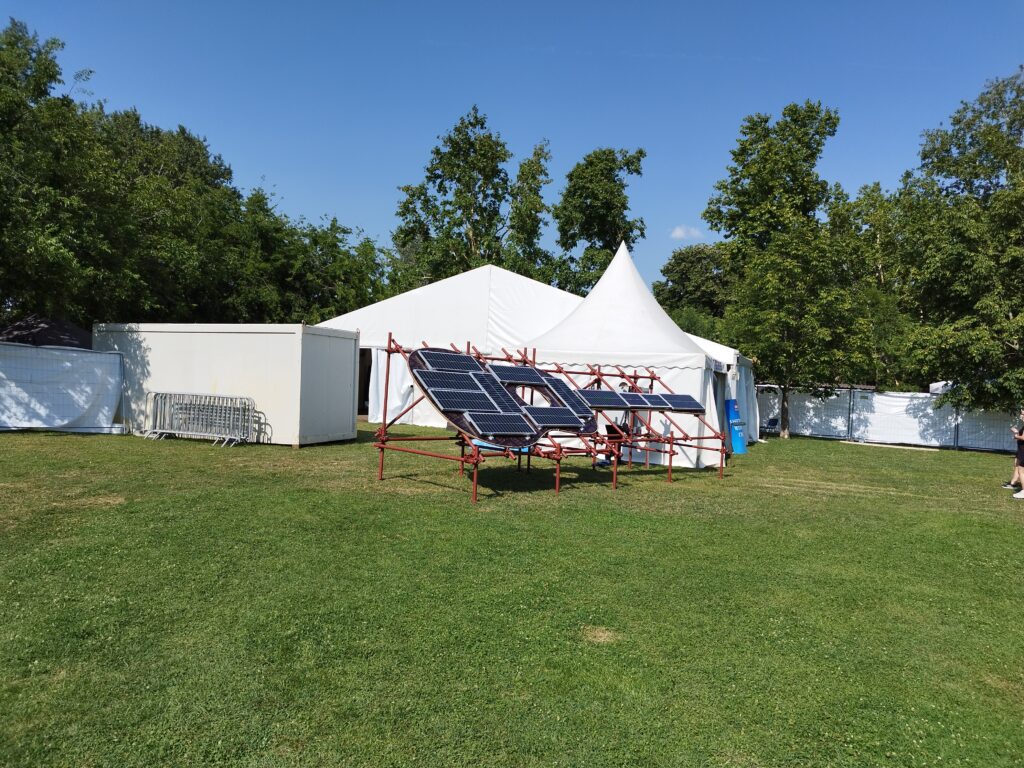
The renowned European music festival EXIT is focusing on sustainability and the protection of the Petrovaradin Fortress this year through the Green EXIT platform with a series of socially responsible initiatives and ecological innovations. The synergy between the cultural industry and science, as recommended by the UNDP office, has resulted in two innovations for greater energy efficiency created by the Robotics Center of the Mihajlo Pupin Institute of Scientific Research. These innovations are prototypes of a solar panel guitar and a solar water heater—modular, collapsible, and portable devices were positioned at the city beach Štrand, in the EXIT camp zone.
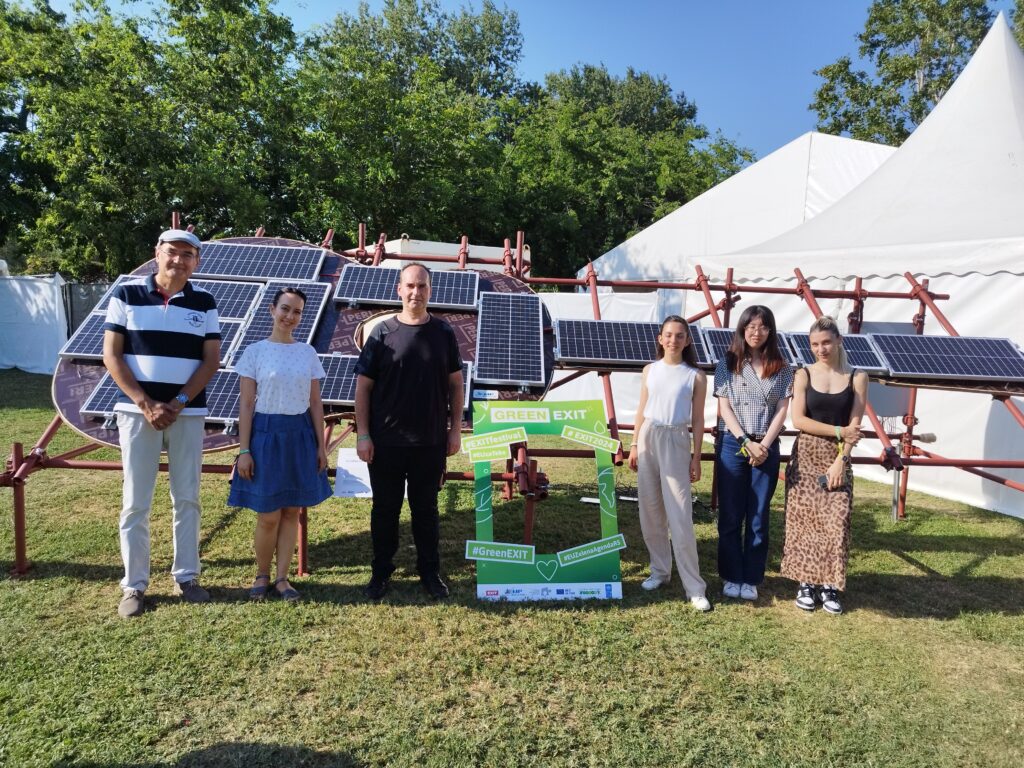
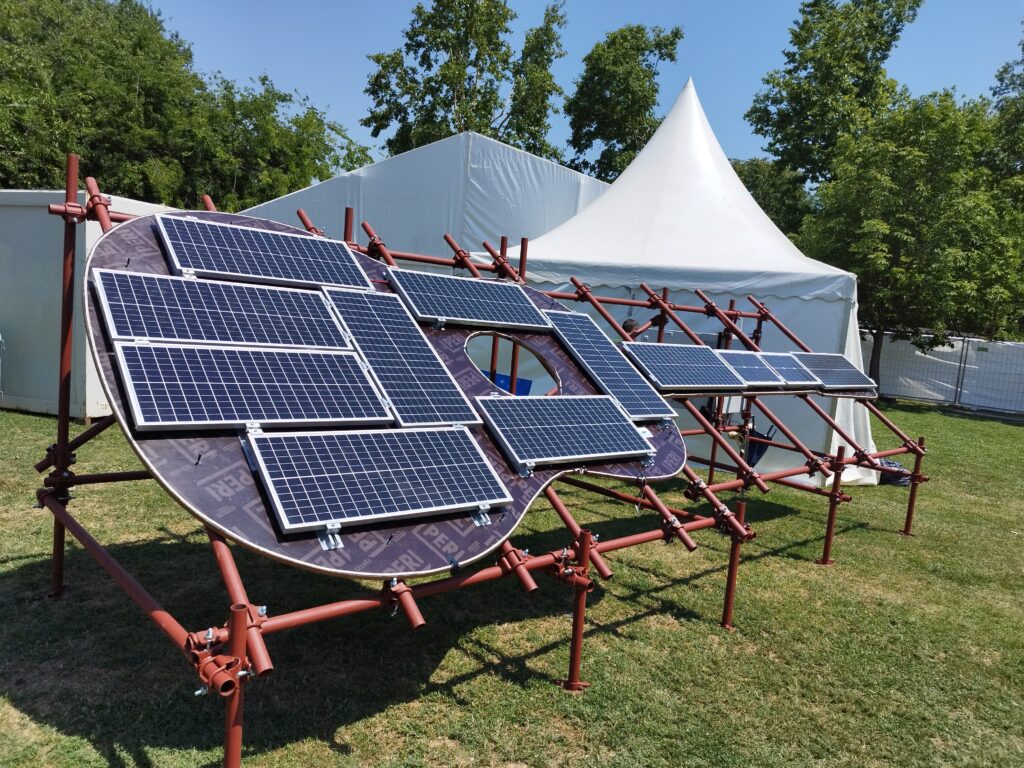
The solar panel guitar is an innovative technical solution resembling a musical instrument—a guitar—with dimensions of 6.2 meters in length and 2.2 meters in width. Functionally, it is a photovoltaic solar aggregate generating electrical voltage. The device was located at the reception of the EXIT camp, providing users with the necessary electric power.
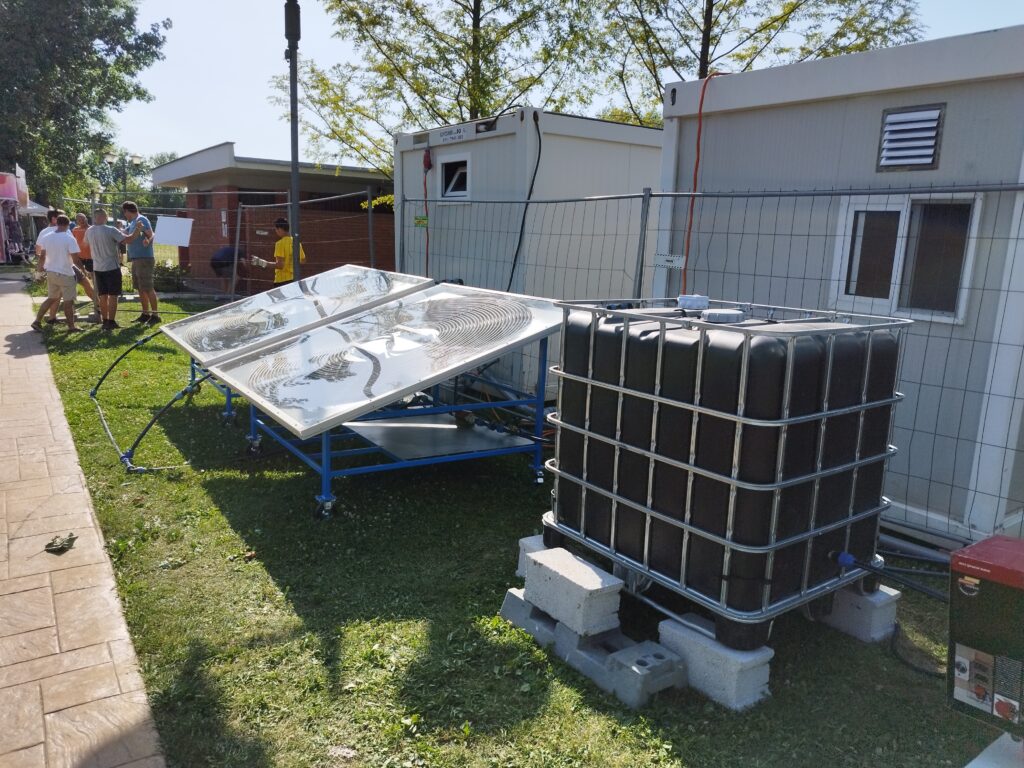
The solar water heater is a simple ecological solution for supplying mobile showers with hot water in the EXIT camp, shaped like a vinyl record. For this year, a part of the camp’s user was able to shower with hot water from renewable energy sources, with plans to expand capacity for future festival editions.
“The partnership between the EXIT festival and the Mihajlo Pupin Institute of Scientific Research in Belgrade extends the reach of the creative industry in the field of energy efficiency, bringing science, culture, and entertainment closer together to actively promote green ideas and social responsibility. This is achieved through a shift in EXIT’s visual identity as a leading festival brand. Through a creative artistic-technical form, we collectively send an unequivocal message to young generations—the festival’s visitors—about the importance of environmental protection and the role of science and art in its promotion,” says Dr. Aleksandar D. Rodić, scientific advisor and head of the Robotics Center at the Mihajlo Pupin Institute.
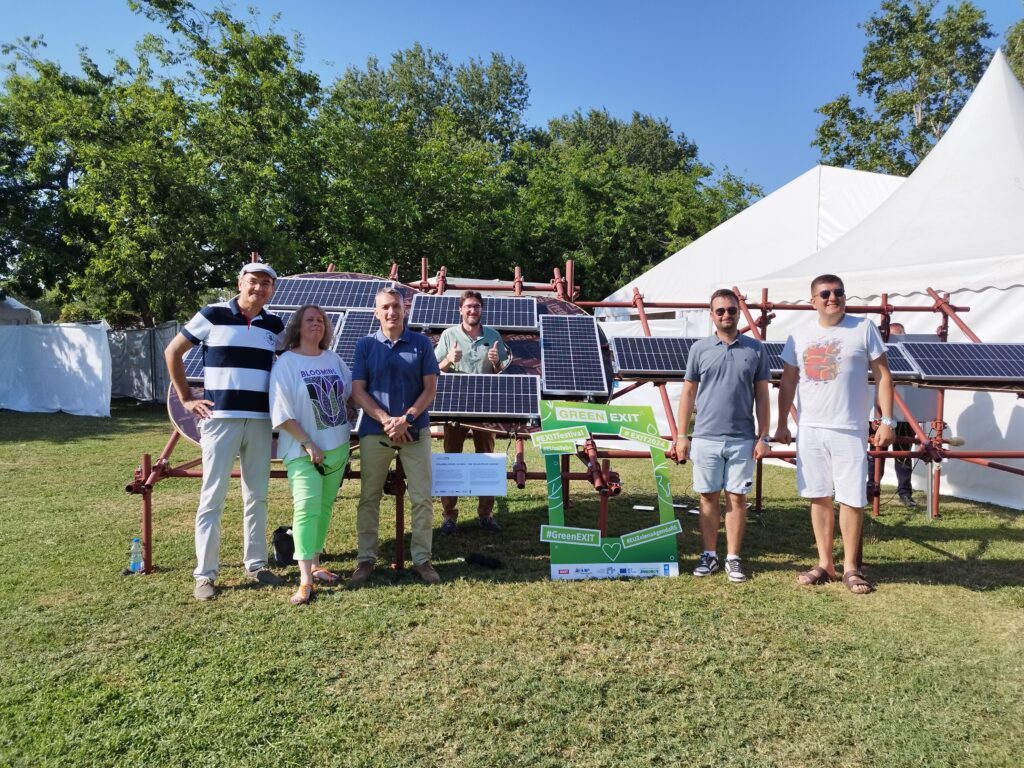
Both conceptual solutions were realized with financial support from the European Union (EU) within the “EU for Green Agenda in Serbia” initiative. This initiative is implemented by the United Nations Development Program (UNDP) in partnership with the Ministry of Environmental Protection.